
|
|
|
#1
 05-12-2006, 01:06 PM
|
||||
|
||||
|
Solid State Zenith; vintage?
Hi guys,
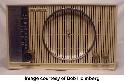
Check out this eBay treasure: http://cgi.ebay.com/ZENITH-Fm-Am-Sol...ayphotohosting I remember reading a post written by Chad saying that not only were the tube-chassis Zenith's 'hand wired', but so were the earliest solid state sets. This one looks to qualify, especially noting the customary dot located at (roughly) 99 MHz for Zenith's Chicago-based radio station. When did that end? Hey Jeff, got your ears on? Judging by the styling, this set has to date from the late-50s, early 60s. If my bid goes through, I'll run a serial number check. I'm almost certain that #2-3101 isn't it...probably the chassis tag. I'm not really into the transistor stuff nor do I ever figure to be, but if this Zenith is from the period I think it is I'd like to have it. Thoughts? 
|
|
#2
05-12-2006, 03:06 PM
|
||||
|
||||
|
I don't think Zenith made solid state table radios until around 1967 or so. A sticking point in soild state line operated sets was either you'd need a high voltage audio output stage for a hot chassis design, or use a power transformer. Either was too expensive compared to tube circuits at the time before about 1966.
|
|
#3
05-12-2006, 05:11 PM
|
||||
|
||||
|
I'm not certain, but I don't think this radio has a transformer. Isn't a high-voltage output stage normal for transistor hi-fi and such? Might be the wrong forum for this discussion. Somehow, I've come to the understanding that solid state was popular and common by the early-to-mid 60s...at least it was in car audio.
I do know Zenith manufactured (battery) transistor radios before 1966...everyone did. Considering that, perhaps there is a transformer in there, or some pretty big soaks. Are you sure about the dates wa2ise? Although I have to admit that even my later tube Zeniths (including the tube stereos) show the 99 MHz marker, my solid state Zenith console built in 1968 doesn't. I'm sure Jeff will chime in and tell us when Zenith stopped broadcasting on that frequency. To me, that's the key in dating this radio.
|
|
#4
05-13-2006, 04:24 PM
|
||||
|
||||
|
Quote:
I looked at the Beitman's repair manuals and the high voltage transistor solid state hot chassis design doesn't show up until the 1966 issue. And becomes common in 1967. Earlier designs used power transformers.
|
|
#5
05-13-2006, 05:33 PM
|
||||
|
||||
|
I have an early Zenith solid state AM/FM clock radio and it still has a steel chassis, but most of the circutry is on a small PC board mounted on the chassis, but parts are still hand wired. No power transformer.
|
| Audiokarma |
|
#6
05-13-2006, 10:55 PM
|
||||
|
||||
|
If that li'l white dot could talk...
The radio being discussed probably dates to the '60s or possibly later, as Zenith used the 99.5-Mc. marker dot on most (but not all) of its AM/FM and FM-only radios until about the late 1970s--years after WEFM, Zenith's operated FM station, left the air.
I don't know exactly when WEFM left 99.5 MHz in Chicago, although the WEFM calls were in use on 99.5 as late as 1976; the switch to WUSN may have occurred in the late '70s or early eighties. I did a Google search a few moments ago and found out just what stations followed WEFM--right up to 99.5's current occupant in the city, WUSN "US-99.5" country-western. The station began as W9XEN, later to become, in order, W51C, WWZR, WEFM, then WUSN, the call sign it holds today. WEFM was a classical station in the '50s and early '60s, predating Chicago's current classical FM, WFMT 98.7 (not to mention several NPR affiliates in the city and its suburbs which also program classical) by some years. WEFM was also one of the first U.S. FM stations to broadcast in stereo using the FCC's then-new multiplex standards; it put its stereo signal on the air on June 1, 1961. The other pioneer in FM stereo broadcasting was WGFM, Schenectady, New York, operated by General Electric, which began stereo broadcasts on the same date. That little white dot near 100 MHz on our treasured old Zenith radios has no significance today, except perhaps to mark 99.5 for alignment purposes. But believe me, if that dot could talk, it would tell one story after another about the three Chicago FM stations that preceded WUSN. Someone should write a book (probably already has).
__________________
Jeff, WB8NHV Collecting, restoring and enjoying vintage Zenith radios since 2002 Zenith. Gone, but not forgotten. Last edited by Jeffhs; 05-14-2006 at 01:27 PM. Reason: Short addition to post
|
|
#7
05-15-2006, 09:11 PM
|
||||
|
||||
|
Thanks everyone, for the replies and info.
Regardless of when the radio was manufactured, it'll fit with the rest of my collection because it *looks* old...well, it really is old, just not as old as most of the others. I'll repeat what I said about being slightly confused about the era when solid state became the norm, 'cause like I said, solid state in car audio was common in the late 50s...and by 1962 or so solid state Am/Fm was available in many cars. Did solid state television production mirror radio and hi-fi production? Seems that would be the case as well. And Jeff? Some Zeniths used both a slash and a dot at the 99.5 MHz position, namely the C/H-845. But (as usual!) you're right about the prolonged use; my 1968 console DOES feature this marker; I just couldn't see if with the dial light off-
|
|
#8
05-15-2006, 09:33 PM
|
||||
|
||||
|
Quote:
|
|
#9
05-15-2006, 09:48 PM
|
||||
|
||||
|
Quote:

__________________
Jeff, WB8NHV Collecting, restoring and enjoying vintage Zenith radios since 2002 Zenith. Gone, but not forgotten. Last edited by Jeffhs; 05-15-2006 at 09:52 PM.
|
|
#10
08-25-2007, 06:30 PM
|
||||
|
||||
|
Quote:
|
| Audiokarma |
 |
|
|





 Linear Mode

