
|
|
|
#1
 11-28-2007, 12:15 AM
|
||||
|
||||
|
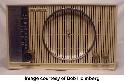
Zenith K731
I just got this Zenith radio and it's in nice shape and the masonite back looks like brand new. The paper tube layout on the bottom of the cabinet looks great too - chassis 7K07. Just a small bash to the lower part of the rt front leg which may come out with some water, after the finish is removed.
These old guys are a lot of fun and I'm looking forward to getting it going. Murray
__________________


|
|
#2
11-28-2007, 12:42 AM
|
||||
|
||||
|
If that set has a selenium rectifier (and, I think it does), replace it with a modern silicon diode and about a 33 ohm, 5 watt resistor ahead of the diode. My cousin has one of those radios that he got from me about 15 years ago and he still uses it all the time. Very nice sound and good sensitivity.
|
|
#3
11-28-2007, 09:47 AM
|
||||
|
||||
|
Will do. I was looking at some of the the nice work that AK member Paula had done on a tube portable, replacing the multi-section filter cap (I guess) with some axials underneath. Maybe I'll do the same thing if there's room.
Murray
__________________
|
|
#4
11-28-2007, 02:56 PM
|
||||
|
||||
|
Ok, this is a new one for me as I've never seen a rectifier like that blue finned thing. Interesting. Also, a pic of the top.
It looks like there's enough room, on bottom near the rectifier, to mount 3 axial caps to replace the multi section can. So far, so good. Murray
__________________
|
|
#5
11-29-2007, 12:07 AM
|
||||
|
||||
|
Yep, that blue thing is a selenium rectifier. They tend to be high failure and will emit toxic fumes when they short. These were very common in radio's and TV's from the late '40's through the early '60's. You can just remove the original part and mount a terminal strip where the original part was and mount the silicon diode on the terminal strip.
You can replace the filter can with single section caps under the chassis. Just make sure you disconnect the old can from the circuit. In fact, I usually don't replace these metal can caps unless they are defective. The metal can ones hold up better than the ones in the cardboard / paper tube. Also, be warned that your radio is a "hot" chassis. That means one side of the AC line is connected directly to the chassis. If the AC plug is in the socket the wrong way, you'll have 117 VAC on the chassis. It's best to use an isolation transformer when servicing these types of radios.
|
| Audiokarma |
|
#6
11-29-2007, 11:21 AM
|
||||
|
||||
|
Thanks for the insight and the reminder on the hot chassis. I've been zapped enough times already, lol.
It looks like I'll start with just changing the axial caps, bring it up on the variac and then get some voltage readings before changing the selenium. Murray
__________________
|
|
#7
11-29-2007, 02:54 PM
|
||||
|
||||
|
Zenith K-731; hot chassis dangers
You will have an excellent set once you replace the selenium rectifier in your K731. These radios were great in their day (late '50s-early sixties) and are still very good performers today. I have one, an ebay score a couple of years ago, that still looks great and sounds excellent even after 44 years (I believe mine was made in or perhaps after 1963, as it does not have the Conelrad [Civil Defense] icons on the AM tuning dial; the Emergency Broadcast System replaced Conelrad in 1963).
I second the warning as to the hot chassis. I will add to what has already been mentioned, however, that the knobs are captivated to the cabinet, so they cannot be removed; this is a safety measure which should not be defeated. Note also that the K731 has an AC interlock on the back cover, as did most TVs of that era. This is also a safety measure which must not be perrmanently defeated, although it possible to temporarily bypass the interlock with a cheater cord for service purposes. However, it is always best to disconnect the AC cord from the wall socket before attempting any kind of repair or service work on the chassis. The only time it is really necessary to have this radio, or any kind of electronic equipment for that matter, under power with the back off is during alignment procedures (and troubleshooting, of course), and even then only when the receiver is powered through an isolation transformer (the safest way by far to work on any AC/DC radio, phono, stereo or TV). There is a 50-50 chance that the chassis will be grounded through the power line, depending on which way the AC plug is inserted in the socket, but the problem with relying on that system is there is just as much of a chance of inserting the plug so that the hot side of the line is connected to the chassis (it is all but impossible to tell whether or not the chassis is grounded or hot unless you use a light bulb tester between the ground screw on the outlet plate and either side of the AC line). Today's polarized AC plugs eliminate the guesswork, as they can be inserted in the wall socket only one way (so that the grounded side of the line is connected to the chassis), but the K-731 was manufactured decades before this type of safety plug was in any kind of widespread use. I would play it safe and unplug the radio if you must work on the chassis for any reason. (Watch out for charged filter capacitors as well; always discharge these before beginning work on any kind of equipment in which they are used.) It is always better to be safe than sorry.
__________________
Jeff, WB8NHV Collecting, restoring and enjoying vintage Zenith radios since 2002 Zenith. Gone, but not forgotten.
|
|
#8
11-30-2007, 09:57 AM
|
||||
|
||||
|
Heh. I was puzzled about not being able to pull the knobs out of the front panel and discovered that they have a retaining barb on them that keeps them from coming out, as you described. It didn't occur to me that it was for shock protection.
I was surprised to find that the radio has a "tweeter" in addition to the 7x5 oval driver. It was fairly easy to get the entire front panel out of the cabinet. I may be able to get it plugged in this weekend. Murray
__________________
|
|
#9
12-20-2007, 01:24 PM
|
||||
|
||||
|
Well, I put axial caps underneath the chassis to replace the multi-section cap and put 1N4007 in place of the selenium. I did check the B+ voltage (right after the 22 ohm 1 watt resistor) before changing and got 102v there with 117 ac on the variac.
After pulling the selenium, I was getting about 145v for B+, using a 33 ohm resistor in place of the 22 ohm, with way less than 117v ac input (maybe about 105v). So I stopped there thinking that the B+ should be in the area of 102v. Just got the Sams for this radio today and it should be 140v. So, it would seem that the selenium was way off and needed to be changed. I'll see if I can get closer to the correct B+ value by changing the resistor. Murray Edit: Here's a pic of the new filter caps and the diode. I drilled and tapped the chassis for #6 screws to mount 2 terminal strips and used the existing screw hole to mount the new diode. Right now, there's a 1/2 watt 33 ohm "power resistor" mounted but I'll change that to something more suitable now that I've got some new parts.
__________________
|
 |
|
|




 Linear Mode

