
|
|
|
#1
 12-16-2008, 05:18 PM
|
|||
|
|||
|
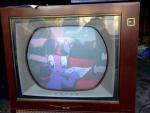
GE TV-radio-phonograph restoration
I found this forum while looking up information on an antique piece that's been sitting around my house for some time. I'm interested in bringing it back to life.
Would love any help or pointers on where to find parts, original manufacturers information or other useful information. Of course, not in that order. So far I think it's a late 40's early 50's General Electric tv/radio/phonograph combination - model 802. Check out the files posted in the introduction forum. 
|
|
#2
12-16-2008, 05:33 PM
|
||||
|
||||
|
An 802? Those are no good, just drop it off at my house, I'll figure out what to do with it
 seriously, that sounds like a nice set. Dates around 1948. Hows the cabinet look? Start a thread about it in the B/W forum, we'll try to help you with it, I suppose this thread is good for the radio part, see, I never know where to post about combos as they fit into all the categories. How much have you worked on tvs? Do you know your way around one? seriously, that sounds like a nice set. Dates around 1948. Hows the cabinet look? Start a thread about it in the B/W forum, we'll try to help you with it, I suppose this thread is good for the radio part, see, I never know where to post about combos as they fit into all the categories. How much have you worked on tvs? Do you know your way around one?
__________________
My TV page and YouTube channel Kyocera R-661, Yamaha RX-V2200 National Panasonic SA-5800 Sansui 1000a, 1000, SAX-200, 5050, 9090DB, 881, SR-636, SC-3000, AT-20 Pioneer SX-939, ER-420, SM-B201 Motorola SK77W-2Z tube console McIntosh MC2205, C26 
|
|
#3
12-16-2008, 05:37 PM
|
|||
|
|||
|
I've done no actual work on any of the above. However, I'm familiar with the technology (modern and ancient) and handy enough to figure out the details given the right guidance.
I suppose signing up for this forum is a sign of intelligence.... right
|
|
#4
12-16-2008, 05:44 PM
|
||||
|
||||
|
A set that old will definitely need to be recapped. Those electrolytics are undoubtedly bad. There are several techniques used to replace them, such as installing terminal strips under the chassis to mount new caps on or, restuffing the old cans, that involves cutting them open, boiling them in water suspended on a string and then pulling out the old guts and finally, installing new caps inside the can with the leads connected to the right leads coming out of the can. Then to replace all the paper/wax caps strewn about the chassis'. Until that is done, I wouldn't power it up. It would also be good to check all tubes including the CRT after the caps are done or in whatever order you want to do it. It would be very wise to get a Sams Photofact too, someone here has one or they can be ordered from the Sams website.
__________________
My TV page and YouTube channel Kyocera R-661, Yamaha RX-V2200 National Panasonic SA-5800 Sansui 1000a, 1000, SAX-200, 5050, 9090DB, 881, SR-636, SC-3000, AT-20 Pioneer SX-939, ER-420, SM-B201 Motorola SK77W-2Z tube console McIntosh MC2205, C26
|
|
#5
12-16-2008, 05:46 PM
|
|||
|
|||
|
i'm getting excited already.
|
| Audiokarma |
|
#6
12-16-2008, 05:47 PM
|
||||
|
||||
|
Quote:
The first thing you'll want to do with your GE is NOT plug it in!!!!!!! It's likely that most, if not all, of the capacitors are bad and will need to be replaced. These capacitors can short and burn up expensive and often unavailable parts! Fortunately, caps are fairly cheap. You'll also need to obtain, if you don't already own: A multimeter (a cheap wal-mart special will do for now), a decent soldering iron, solder, solder puller, de-soldering braid, and an assortment of tools (screwdrivers, wire strippers, pliers, etc). A variac, a good CRT tester, and a regular tube tester are also a big plus. The variac will allow you to start out at a low line voltage and gradually bring it up to normal line voltage. This will help spot trouble in whatever equipment you are working on before it causes serious damage. A CRT tester will determine if your picture tube is any good. I always like to verify the condition of the CRT in any TV before I begin work on it. It's very frustrating to repair a TV chassis just to find out that the CRT is shot. Anyway, I think I'll stop for now and let all this soak in. Let us know if/when you need help. There are plenty of people on here who are more than willing to lend a hand.
|
 |
|
|




 Linear Mode

