
|
|
|
#1
 03-03-2010, 03:13 AM
|
||||
|
||||
|
1953 Zenith - What to do now?
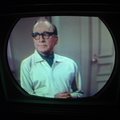
Hey all, I just picked up what i believe is a 1953 Zenith. Powers on and was able to get someone what of a picture by running my cable box through it. Sound quality is perfect. Just wondering what could be causing the picture to not fully expand and clear up? Played with All the adjustments and this is the best i could get. Any input?
By the way, the film on the screen is from "To Kill a Mockingbird" in case anyone was wondering. Thanks! -Matt 
|
|
#2
03-03-2010, 07:19 AM
|
||||
|
||||
|
Has it been recapped? If not, I suggest you don't use it till this has been done. It's got verticle and horizontal issues, which are most likely caused by the old capacitors in those circuits. Get a hold of a schematic diagram, and get to work replacing them. Having a raster to being with is very promising.
|
|
#4
03-03-2010, 01:11 PM
|
||||
|
||||
|
Nice TV - I like it. I just finished restoring a 1950 Zenith. My first TV restoration - just experienced with Radios. It was the most enjoyable restoration I have done.
__________________
CW 1950 Zenith Porthole - "Lincoln"
|
|
#5
03-03-2010, 01:13 PM
|
||||
|
||||
|
Replace the old paper and electrolytic capacitors, beginning with the electrolytics in the power supply.
http://antiqueradio.org/recap.htm If you look at the TV articles in this section, you'll get an idea what's involved in reviving old TVs. http://antiqueradio.org/restoration.htm Executive summary: it takes more than replacing one or two little parts, if you want the TV to be safe and reliable. If you have never repaired an old radio or TV before, I suggest getting a cheap tube radio and practicing on that. Don't zap yourself with high voltage: it can kill you. Meanwhile, as miniman82 suggests, it's better not to play it any more until you have at least checked the power-supply electrolytics. Phil Nelson
|
| Audiokarma |
|
#8
03-04-2010, 01:43 AM
|
||||
|
||||
|
Thanks for all the info guys!
Maybe this is the TV i should learn on. Never serviced a set other than testing tubes and replacing them. I would imagine this is a fairly straight forward set to work on, rather than start on my 62' Magnavox Console. Ok, now where to start!?!?!
|
|
#9
03-04-2010, 07:44 AM
|
|||
|
|||
|
easy, grab a schematic (helpful but not absolutly nessasary) Start by replacing every wax paper cap. Go slow, one at a time, figure out a way that works for you that marks where it goes so if you get distracted you want goof up. there are all kinds of stratagies on how to replace, as far as pig tailing vs. complete removal from the term strip.
I pig tail when working on delidcate coil form terminals, they break easy and the stress of removal can ruin your day, otherwise I use solder wick on point to point chassis and desolder gun on PCB 's. Some time you will have several caps going to one place on a term strip, this can be tricky, if you desolder all the caps 1st you end up wiht a bunch of un hooked caps. Just be slow, even pic would help if you camera can get in close. Since its your 1st time you may want to just do one cap at a time and try it after each one, that way if you goof you know where to look, as opposed to a shot gun replacement of all at once. This also applies to the fact that the tv is somewhat working. I know its a PITA to do one then set it up, but better that than goofing and having to trouble shoot the problem, which can be hard esp if your new at it and dont have the tools to trouble shoot. other than the paper caps, you can replace the large value electrolytics, which will prob increase at least the vert if the vert osc tube is bypassed with one. With a set that old the filter cans "may" be bad, not always but I would hold off on that until you get the papers done. again a strategy applies, do you go under the chassis or stuff the cans, I stuff the cans since it keeps the lead dress orig, opinions vary on this, I say do what you prefer, it really makes no diff, just as long as you take the old cap out of the circuit. with a schematic and perhaps a Sams folder you get voltage checks and resistance measurements at the pin sockets. A helpful tool if you have to trouble shoot, but by no means the gospel. Good luck with it!!
|
|
#10
03-04-2010, 07:58 AM
|
|||
|
|||
|
One last thing word of warning, CRT's can bite you, even when off they store a charge so you need to discharge the anode before messing about with them. Also in general the B+/boost etc... can bite as well as charged filter caps, there are lethal voltages associated with tube gear in general so it is assume you are aware of this and take nessasary precautions. Lastly be aware that the CRT can implode shooting glass and metal parts everywhere, again dangerous so you need to either read up on how to handle or stay away. Don't want to scare you off, but feel the need to make sure you know what your in for.
|
| Audiokarma |
|
#11
03-04-2010, 02:30 PM
|
||||
|
||||
|
Like these guys warned, ground the anode of the CRT every time you power it off. Simply use a test probe with one end grounded to the chassis and touch the anode. If you have a metal tube, find where the anode wire connects and tap it a few times with the grounded probe. Most likely you will see small sparks.
As far as recapping, I first made a list of all the capacitors above .001 and ordered the appropriate quantity before I even started. In addition, order all the Electrolytic capacitors too. Some of your electrolytic capacitors will be in cans on the top of the chassis - you may or may not want to gut the cans and place capacitors in the can. I chose not to do that as there was plenty of space underneath to work. Also, order a few terminal strips to mount if you choose not to restuff the electrolytic cans. My 1950 Zenith porthole had 5 bad tubes. You might want to go ahead and check all your tubes beforehand and order replacements. Also, get some Deoxit contact spray cleaner to clean all the contact points especially in the drumb tuner. When I recapped my 1950 Zenith porthole TV, I dismounted the CRT and put it in a safe place. I used a small "test CRT" until I got good video and sound. Much easier to move the chassis without that heavy CRT mounted on it. In addition, I made a wood frame that tilted my chassis making it easier to get in there and recap the chassis. I found that an immense help. Sounds like a lot of work -- well it is -- but I think you will find it enjoyable. I took a lot of pictures of my restoration and posted a lot about the restoration process on www.AntiqueRadios.com in the Antique Television Discussion forum. If interested, look for "Zenith Porthole TV - G2438R Restoration". I started off with a very rusty chassis. It looked really nasty at start but I got it looking and working real nice now.
__________________
CW 1950 Zenith Porthole - "Lincoln"
|
|
#12
03-04-2010, 08:10 PM
|
||||
|
||||
|
Oh yeah, also survey all your sand ohm resistors - every single one of those need to be replaced. Might want to go ahead and order replacement resistors for every on above 2 watts. Make sure you have a good assortment of resistors on hand as you will want to ohm out all the resistors looking for out of tolerance ohmage.
Hey, if you are like me you will find that the restoration of your TV is one of the most rewarding and interesting projects. This was my first TV restoration and like you I started out having to learn a lot. Learning something new like this is something I really relished.
__________________
CW 1950 Zenith Porthole - "Lincoln"
|
|
#13
03-06-2010, 04:54 PM
|
||||
|
||||
|
You have a very nice TV.
Why don't you go ahead and start a Restoration thread and post what you do along with lots of pictures. I would be interested in following along and I think others would too.
__________________
CW 1950 Zenith Porthole - "Lincoln"
|
|
#14
03-06-2010, 05:35 PM
|
||||
|
||||
|
All I can say is this is the place to learn. The people here have been most helpful to me when I had no idea of capacitors and such. Now I am able to do quite a bit of repairing and resto. That is a real nice set.
|
 |
|
|




 Linear Mode

