
|
|
|
#1
 04-29-2010, 04:44 PM
|
||||
|
||||
|
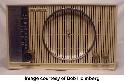
Monogram AM/FM (General Electric) UOP975F radio.
Hello.
This is my first post, I was guided here by another user of this forum - something for which I thank him. Problem: I found among some antiques a sympathetic radio: Monogram AM/FM (General Electric) model UOP975F. I convinced him to work, but I want his scheme - does anybody arround here have his electric scheme? I attach some photos - some devices had the same scheme, just different names.
__________________
In the absence of doubt, there is no change. 
|
|
#2
04-30-2010, 03:29 AM
|
||||
|
||||
|
That looks like an export version of a very common GE radio, the P975 (followed by a letter, yours being P975F.) They were sold here in the U.S. as AM/FM, AM/SW, AM/Marine and AM/PSB I believe. Never have seen one branded "Monogram" before.
Where was this set originally sold?
|
|
#3
04-30-2010, 09:32 AM
|
||||
|
||||
|
Something doesn't seem right about this radio. The FM broadcast band is correct for this country and perhaps a portion of Europe, but the AM band is all wrong -- starts with 550 and ends with 200. Someone must have left a digit off that 200, but still it would be wrong since the BC band would then run from 550 to just 1200 kHz -- 500 kHz (0.5 MHz) short of the actual end of the American AM band. The only thing I can come up with that makes any sense is that the AM BC band on this radio is calibrated in meters, not actual frequencies in kilohertz; this also is an almost dead giveaway that the radio was an export version, since US and Canadian AM radios no longer refer to their AM stations by wavelength in meters--despite the fact that Canada uses the metric system almost exclusively. I remember many old AC/battery tube-type portable radios of the '50s having the BC scale calibrated 550-1600 kc, with another scale (meters) directly below it; I once had a rather large GE three-way tube-type portable radio with a dial calibrated this way. I don't know if that model was meant for export. Hmmm.
 Something else to consider about the GE Monogram set we are discussing here is that the radio was made in the United States of America (look at the label on the back cover, which clearly states "Trademark of General Electric Company, U. S. A. . . . Made in USA), which is another tipoff that the set was made here but intended for export to Europe. Something else to consider about the GE Monogram set we are discussing here is that the radio was made in the United States of America (look at the label on the back cover, which clearly states "Trademark of General Electric Company, U. S. A. . . . Made in USA), which is another tipoff that the set was made here but intended for export to Europe. The GE Monogram trademark, IIRC, was used on some of their television CRTs of the 1950s as well.
__________________
Jeff, WB8NHV Collecting, restoring and enjoying vintage Zenith radios since 2002 Zenith. Gone, but not forgotten. Last edited by Jeffhs; 04-30-2010 at 09:45 AM.
|
|
#4
04-30-2010, 10:34 AM
|
||||
|
||||
|
Right above the "200" spot on the dial I can make out "Luxembourg"
|
|
#6
04-30-2010, 11:52 AM
|
||||
|
||||
|
Well i live in Romania, the radio was bought from a local dealer - but this particularly piece was brought from England (hope i'm right).
Although the scale is expressed in kHz (550-200), the received frequencies are between 550-1600khz (I have a local radio station that broadcasts in 1035khz and i can receive his transmissions loud and clear). Despite the difference in appearance, yes - I tend to believe that the model UOP975F is identical in terms of electric scheme with P975F model. http://www.radiomuseum-radiowelt.at/...=715&Itemid=96 But initial problem remains - reformulated - does someone has a diagram of P975F?
__________________
In the absence of doubt, there is no change.
|
|
#7
04-30-2010, 12:06 PM
|
||||
|
||||
|
UK market makes sense, "Light" "Home" and "Third" being the BBC service names through 1967... Radio Luxembourg was popular there as well at that time...
BBC on Wikipedia
|
|
#8
04-30-2010, 12:44 PM
|
||||
|
||||
|
Just do some math... it looks like the scale on your radio is indeed Meters wavelength... 300,000/ Meters = kHZ . So then, 300 meters = 1000 kHz, 200 meters =1500 kHz, 550 meters = 545 kHz.
jr Last edited by jr_tech; 04-30-2010 at 12:51 PM.
|
|
#9
04-30-2010, 03:32 PM
|
||||
|
||||
|
Must be in meters as noted. The same variable capacitor assembly is used for
both bands, so there is no way the FM frequency would increase while the MW frequency was decreasing. Interesting radio from a North American viewpoint!
|
 |
|
|





 Linear Mode

