
|
|
|
#1
 08-15-2012, 03:52 PM
|
||||
|
||||
|
Police scanners?
Slightly OT here, I know, but they are "transistor radios," sort of. Just wondering if anyone here is into police/fire, etc. scanners, retro or modern. I have never owned one but am considering getting one. Does it make any sense to get one a few years old, or has modern technology made them obsolete?
Thanks in advance.
__________________
I have one of those around here, somewhere 
|
|
#2
08-15-2012, 04:07 PM
|
||||
|
||||
|
Yeah...I have an ICOM R-7000, sort of the "Mack Daddy" of 'em all. It receives from 25 mHz to 2 GIGA hz...In AM & several different FM modes. Really good FM BCB DXer, too. You never see 'em for sale much-People what have 'em DON'T wanna give 'em up !
__________________
Benevolent Despot
|
|
#3
08-15-2012, 07:51 PM
|
|||
|
|||
|
Scanner use ability would depend on your local public service systems. Analogue, digital, encrypted, trunked, frequency, etc. Radiorefrence.com will probably have the frequency information and the type of system. There are lots of things to listen to in most areas. I would not buy one without 800mhz trunking capability to use. Now if you want to collect vintage scanners, that is different.
|
|
#4
08-15-2012, 08:30 PM
|
|||
|
|||
|
I suspect the police use encoded stuff, and probably have moved to much higher frequencies. I am not sure of this but it makes sense.
I remember listening to police radio just above the AM BC band, around 1600-1700 kHz. Oops, I mean kc.
|
|
#5
08-15-2012, 10:34 PM
|
||||
|
||||
|
I have a few scanners, none are the recent trunking-capable ones, and two of mine are "vintage": A Radio Shack one with the eight crystal sockets (and wonderful audio from a nice-sized internal speaker), and a Bearcat 100. That Bearcat was the first handheld programmable scanner, from around 1980 or so.
__________________
Chris Quote from another forum: "(Antique TV collecting) always seemed to me to be a fringe hobby that only weirdos did."
|
| Audiokarma |
|
#7
08-16-2012, 08:22 AM
|
||||
|
||||
|
I have a RadioShack 2050 TrunkTracker scanner that works well with the older analog Motorola trunking system several of the local municipalities here use together. But some others like Irving TX have gone all digital. Would probably be a good idea to find someone local to ask so you don't end up with a boat anchor or paper weight.
|
|
#8
08-16-2012, 10:18 AM
|
||||
|
||||
|
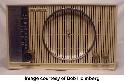
I have this model Regency:
 My parents bought it in the mid 1970s, and it used to creep the HELL out of me as a kid, looking like some evil robot. So, of course, I still have it  Hard to find crystals, though. I rarely use it because most of the frequencies have updated. I have a new Radio Shack 200 channel programmable too, but it's just not as much fun....
__________________
"Restoring a tube TV is like going to war. A color one is like a land war in Asia."
|
|
#10
08-16-2012, 12:53 PM
|
|||
|
|||
|
I've got a few old crystal-tuned Bearcats, some slightly newer electronically tuned ones and a few Radio Shack scanners from the very late 1990s/early 2000s, including one that is trunking capable.
The old scanners still generally work, though a few of them have developed "character". I don't use them often, but sometimes it is fun to haul one out, give it a quick programming run and have a listen to what is going on. I have one of the early electronically tuned Bearcats hooked up for listening at a moment's notice, but I think it's going to need service soon. Police/ambulance/fire are still analog systems here. The municipal radio service appears to have been retired in favor of things such as Nextel cellular phones.
|
| Audiokarma |
|
#11
08-16-2012, 01:16 PM
|
||||
|
||||
|
Way back, had a little converter for the Chicago police FM - converted down to AM band, where you could tune a pocket radio for slope detection. But they changed frequencies and/or went digital long ago. Never tried to pursue it after moving to the burbs.
|
|
#12
08-16-2012, 09:15 PM
|
||||
|
||||
|
There's generally much less traffic over the air nowadays too, since the police have mobile data terminals in their cars and do a lot of their communicating via "chat". But if I hear a siren I can turn up the scanner and usually find out generally what's happening just not near as much detail as it used to be.
|
|
#13
08-17-2012, 10:19 PM
|
||||
|
||||
|
I had gotten very big into them in the mid-90s. I always had at least one within earshot, typically 2 or 3 of them running at my bedside listening post. Combination of newer (at the time) programmable models and a few crystal scanners. The old BC III seemed to be the gold standard and I still have one. Most of the local municipalities switched from lowband VHF to digital at about the same time, turning everything I had into doorstops (for the most part). I keep on at my workbench to switch on when the siren goes off, as they still simulcast the initial dispatch on the old frequency. I'll admit that I was also pretty big with eavesdropping on the old cell band. Nowadays, even the PRO-2006 just gathers dust. Maybe someday I'll sit down with it and see what I can still find. If there is anyone who wants a fixer-upper BC III or BC-210, let me know, yours for cost of shipping.
__________________
Bryan
|
|
#14
08-18-2012, 10:38 AM
|
||||
|
||||
|
I think one big reason police and fire departments went from VHF to UHF, digital, etc. was to prevent folks outside the departments from listening in. These signals, after all, are not meant to be listened to by the general public; the police, fire departments and such won't make a fuss about it as long as you don't repeat what you hear over their frequencies, but still these are not supposed to be overheard by unauthorized persons. The fact that they are radio signals easily heard via standard receivers makes no difference. I believe this was even the case in the 1930s, when police departments had "one-way" radio systems that operated above 1700 kHz. The officer(s) would receive the call from the dispatcher over the car radio, then would call in to the precinct using police "call boxes" connected directly to police HQ and mounted on telephone poles. Many home radios of the '30s could tune in these one-way signals at 1700-1710 kHz (they would receive only the officer's end of the transmission), but, then as now, the signals were not meant to be overheard. The nature of radio signals makes it impossible not to hear these transmissions if you have the proper receiving equipment and know where to listen; however, if police and fire departments are really intent on making their transmissions private, they can and will do everything in their power (and budget) to do so, including moving to higher frequencies, digitally scrambling the information carried over said frequencies, and so on.
These days, with the Internet and chat, VoIP, etc. it would not surprise me if many police departments are abandoning traditional radio systems altogether, using chat and other modern-day communications techniques to communicate with headquarters and between officers. This may reduce the chances of ordinary people eavesdropping on the police/fire departments, but it won't stop it in any event. The only way to completely end all eavesdropping will be if someone eventually invents a method by which chat and VoIP communications between and among public-service agencies such as police and fire departments can be scrambled in such a way that people not meant to hear them cannot do so, using ordinary computers.
__________________
Jeff, WB8NHV Collecting, restoring and enjoying vintage Zenith radios since 2002 Zenith. Gone, but not forgotten.
|
|
#15
08-19-2012, 02:08 AM
|
||||
|
||||
|
Thanks, guys, all good info. The move to higher freqs./trunking would explain why I don't hear that much traffic on VHF/UHF despite living in a fairly populous urban/suburban area--but I do hear something. Guess I'll need to do some research into which freqs. are still active here.
__________________
I have one of those around here, somewhere
|
| Audiokarma |
 |
|
|









 Linear Mode

