
|
|
|
#1
 09-12-2015, 01:17 AM
|
||||
|
||||
|
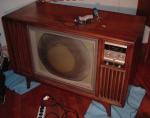
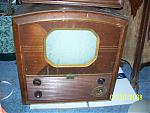
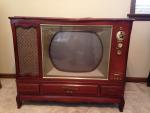
GE 12T1 CL find
Kept telling myself no, no, I'm not going to go look at this... well, it's in my Kitchen now.
 It was only 30 miles away and looked clean so I took a drive over with my CRT checker, rule is, no more sets with bad CRT's. It started out looking bad so I turned it up to 8 volts for about 60 seconds, it gradually climbed well into the good range so I turned it off for a bit then retested it at normal voltage, it still checked great, dropped it down to about 5 volts and it still held good so I bought the set. When I got home I tested the CRT one more time, it went way into the good range in just the time it took to set up the tester! The drive home sucked due to construction, an hour to go two miles!  When I got here I tried the set on the Variac and got some static from the speaker but noticed the 6BG6 and a few other tubes weren't lighting. I recalled that this chassis has a split series heater string so I went looking for missing tubes and found the Damper and 1B3 were gone, replaced those and the heaters all lit but I still got nothing, and it started to smell hot so I shut it down. It'll need recapped. I have a complete spare chassis from a console I junked and another from a 10" Locomotive if I need any hard parts, but that's a ways down the road, lots of other projects ahead of it. It's missing the back, anyone have a spare hanging around? or a picture of what it looks like, metal, hardboard? GE sure liked Brass back then! 
|
|
#2
09-12-2015, 07:55 AM
|
|||
|
|||
|
I wonder why back are so often missing? I've heard its because repairmen failed to put the backs on the sets after service. If my parents ad taken a set in for repairs, and it as returned with ho back, they would have raised heck with the repair shop.
|
|
#3
09-12-2015, 08:29 AM
|
|||
|
|||
|
I dont think professional repairmen would lose the back... besides they would not want the liability of someones kid or cat getting electrocuted. A lot of people back then would take the tubes out, and run down to the drugstore to use the self service tube checker when their set went out. then either they would decide the set wasn't worth the investment if expensive tubes were bad.. or they would buy a tube and that still didn't fix the problem...and chuck the set in the attic or basement..and the back never got put back on and eventually got lost.
|
|
#4
09-12-2015, 09:20 AM
|
||||
|
||||
|
I love that style.. I'm glad you got it.. If I were local to it, I would have jumped on it.. It's something not too big... Glad the CRT woke up like it did..
__________________
Looking for an all tube or hybrid color TV set from the late 1960s, early 1970s that's in a steal cabinet..
|
|
#5
09-12-2015, 09:45 AM
|
|||
|
|||
|
Quote:
|
| Audiokarma |
|
#6
09-13-2015, 09:19 AM
|
||||
|
||||
|
The missing back question puzzled me for many years, until I started asking around, a lot of the older people that I talk to, stated that they knew someone who worked on TVs or radios or electrical stuff, and they always took their stuff there because the repair shops cost too much money. Back in the day there were literally tens of thousands of men and women trained by the US government for electronic assembly and repair due to World War 2. So there you have it missing back or simply not put on by amateur repair people who saw them more as a pain in the butt than anything else. So much different than today when you simply just throw it away if it quits, because no one knows how to repair anything and nothing is made to be repaired... Even trying to buy modules to swap out in the flat panels is cost prohibitive. I would think someone could make a pretty good money in the niche market for making reproduction TV and radio backs.
__________________
RCA VICTOR and its dealers bring you......
|
|
#8
09-13-2015, 07:19 PM
|
||||
|
||||
|
I have the same set with its back. I got mine from a TV repairman that passed away. Below is the picture of the back. It is hardboard with a tube layout glued to it.
|
|
#9
09-13-2015, 07:36 PM
|
||||
|
||||
|
Quote:
Thank you for the picture, it looks like it would be pretty easy to make something passable.
|
|
#10
09-14-2015, 06:32 AM
|
||||
|
||||
|
Quote:
__________________
"Restoring a tube TV is like going to war. A color one is like a land war in Asia."
|
| Audiokarma |
|
#11
09-14-2015, 02:07 PM
|
||||
|
||||
|
I agree that ventilation and the fact that they often needed service made it pretty tempting to leave the back off. And back then people seemed to have better common sense about not sticking their hands inside of glowing electrical appliances.

|
|
#12
09-14-2015, 02:26 PM
|
||||
|
||||
|
I think at least in some cases the back was removed for servicing when the set quit, if it wasn't repaired quickly it probably got stuck in a closet or basement and eventually they got separated from the set and lost.
|
|
#13
09-14-2015, 08:11 PM
|
||||
|
||||
|
That's a rather uncommon GE. Very nice find.
I've been collecting vintage TV's for decades and many from the early post-war era have their backs missing. I read that in these early days magazine articles told TV owner to leave them off for better cooling. Once they were separated from the set, that was it. I've made some nice backs with perforated, fairly heavy gauge steel stock using metal sheers, a dremel, and a grinding wheel. It's not east to work with, but they look very convincing if done neatly and cleanly. You can find the stock on eBay.
|
|
#14
09-17-2015, 04:33 PM
|
||||
|
||||
|
Quote:
 http://milwaukee.craigslist.org/atq/5196773746.html Isn't this the same model? Hopefully someone has already snatched it.
|
|
#15
09-17-2015, 08:03 PM
|
||||
|
||||
|
Quote:
Last edited by decojoe67; 09-17-2015 at 08:07 PM.
|
| Audiokarma |
 |
|
|






 Linear Mode

