
|
|
|
#1
 01-24-2006, 11:33 PM
|
||||
|
||||
|
My motorola Has terrible focus
I've been working on restoring a 7VT5 that I picked up awhile ago from the original owner. Today I finally got the caps replaced and the chassis back together thanks to a parts chassis I had.
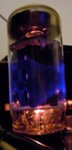
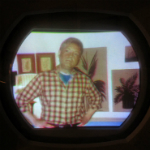
First light on the screen was WAY too bright. I quickly turned down the brightness. THere is poor contrast, and I have trouble at times keeping a picture on the screen. The sync is stable, and there is clear, but hushed sound. The worst part is, the picture has terrible focus, even with the control maxed out. I don't really think its the picture tube. The raster was bright as hell when it first powered up. What could be causing this bad focus problem? **Some screenshots and the near finished chassis pictured below. Finishing touches will be a resistor network to replace the 'ballast tube', and new rectifiers.**
__________________
Jordan 
|
|
#3
01-24-2006, 11:48 PM
|
||||
|
||||
|
I honestly have nothing to measure the focus voltage with. My DMM maxes out at just under 1kv, and I do not have a HV probe to measure it...
Any obvious things to look for that I am missing? How are electrostatic tubes focused?
__________________
Jordan
|
|
#4
01-25-2006, 12:32 AM
|
||||
|
||||
|
Electrostatically!
 The focus anode is just past the "grid" and it works at a positive voltage somewhere between the potential of the grid and the second anode. The focus anode is just past the "grid" and it works at a positive voltage somewhere between the potential of the grid and the second anode.
__________________
tvontheporch.com
|
|
#6
01-25-2006, 07:08 AM
|
||||
|
||||
|
Ceramic HV Caps
I see you replaced the 6KV caps with ceramic discs. This will work for the HV and horizontal circuits but not for the vertical. You will have vertical hold drift after warm up. I did the same thing with my TS-18 chassis and had to change the caps for the tubulars from Allied Electronics.
Regarding the focus, check/replace all resistors in the HV and focus circuits. Check the focus pot for correct resistance. If you can get a probe, you will also want to check the high voltage. It should be around 6KV. Not only does the convergence look good, the greyscale is nearly spot-on too.
__________________
Just look at those channels whiz on by. - Fred Sanford
|
|
#7
01-25-2006, 09:02 AM
|
||||
|
||||
|
I kinda figured the 6KV ceramics in the vert section wouldn't do the trick. But its what I had on hand at the time to get the set going. I'll look into allied about getting the caps I need. One of these days I've got to get an HV probe...
__________________
Jordan
|
|
#8
01-25-2006, 09:23 AM
|
||||
|
||||
|
You can make a HV probe for your DVM easily. Connect the DVM to the B+ line and measure the voltage. Then, take some high value (megohm) resistors and put a few of them in series between the DVM and the B+ line. Experiment with resistors until you get a reading of 1/10 of the B+ voltage.
Now make a probe, using the resistors soldered together in a string, then put inside a piece of heat shrink tubing. With this probe, the meter will read 1/10 of the voltage being measured. Last edited by Steve McVoy; 01-25-2006 at 09:27 AM.
|
|
#9
01-25-2006, 05:37 PM
|
||||
|
||||
|
Best focus should come somewhere in between, not at one end of the control's range. If you're still getting sharper as the control hits max, that's a clue as to being under or over voltage.
I'd look at the divider resistors, and IIRC, they can acty funny at high voltages too. I think they're all high ohmage and prone to drifting anyway... Sneaky leakage paths loading things down could do it to - the HV supply on these sets has less than zilch current....
|
|
#10
01-25-2006, 05:49 PM
|
||||
|
||||
|
It turned out to be a dirty control. After cleaning the focus control and letting it dry overnight, its sharp as a tack.
Now I've just got to work on the weak contrast...
__________________
Jordan
|
| Audiokarma |
 |
|
|







 Linear Mode

